
Table of Contents
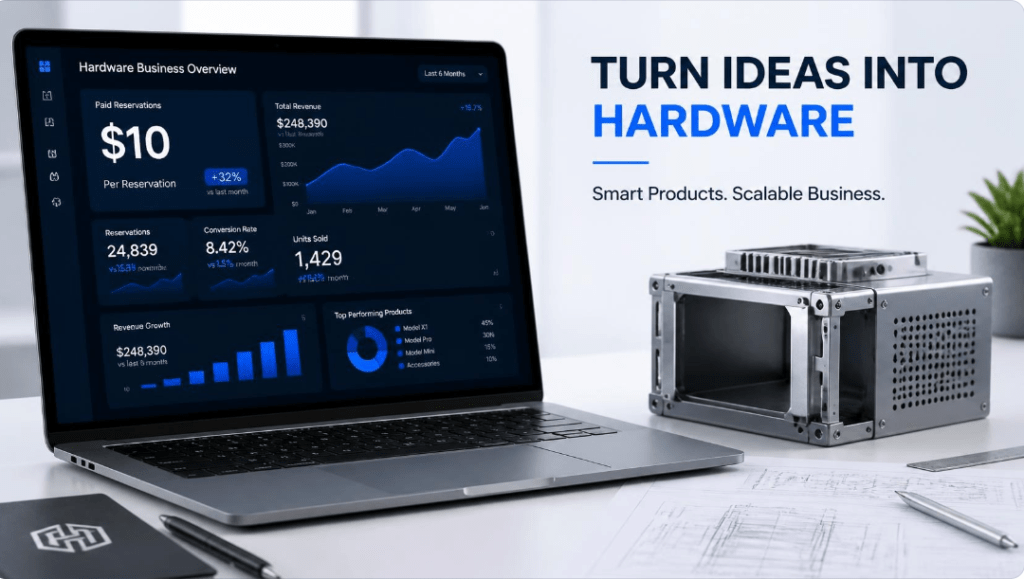
Prelaunch.com saves from burning cash — and if you are a hardware founder who has ever stared at a mold-tooling invoice at 2 a.m., you already know exactly why that sentence matters. Roughly 90% of hardware startups fail not because the engineering is bad, but because the founders manufacture first and discover market demand second. By the time the injection mold is cut, the container is shipped, and the warehouse invoice arrives, the illusion of demand has already cost them anywhere from $30,000 to well over $300,000. This is not a design problem. It is a sequencing problem — and it is entirely preventable.
This analysis breaks down exactly where hardware capital goes to die, and how a disciplined pre-launch validation layer — built on real financial commitment from real buyers — turns a six-figure gamble into a calculated, de-risked decision.
The Anatomy of Sunk Costs in Traditional Hardware Development
“Sunk cost” sounds abstract until you are the one who signed the purchase order. In hardware, almost every dollar spent before first revenue is non-recoverable. Understanding the structure of this spend is the first step to protecting it.
3D Design & Engineering: The Deceptively Cheap Entry Point
CAD modeling, DFM (Design for Manufacturability) reviews, and engineering iterations typically run $3,000–$15,000. This feels manageable — which is exactly why founders rush past it without pausing to ask whether anyone actually wants the finished product.
Injection Molding & Tooling: The Point of No Return
This is where hardware becomes irreversible. A single production-grade mold can cost $8,000 to $60,000 or more, and once it’s cut, your product’s form factor is locked. There is no refund on steel. Founders who commit to tooling before validating demand are effectively pre-paying for a guess.
Minimum Order Quantities (MOQ): Betting the Warehouse
Factories protect their own margins with MOQs — often 500 to 5,000 units. A founder who has not confirmed real purchase intent is forced to pre-fund an entire production run on faith, tying up $10,000–$100,000+ in inventory that may never sell.
Blind Ad Spend: Marketing Without Market Truth
Once units exist, the pressure to move them leads to reactive, unfocused ad spend — often $2,000–$20,000 a month — built on assumptions rather than data about who actually converts. Ad platforms happily take that budget regardless of whether the underlying product-market fit exists.
| Cost Category | Typical Range (USD) | Recoverable if Demand Fails? |
| 3D/CAD Design & Engineering | $3,000 – $15,000 | No |
| Injection Mold Tooling | $8,000 – $60,000+ | No |
| Minimum Order Quantity (MOQ) Production | $10,000 – $100,000+ | Partially, at deep loss |
| Blind Paid Ads (Pre-Validation) | $2,000 – $20,000/mo | No |
| Warehousing Unsold Inventory | Ongoing, compounding | No |
Prelaunch.com Saves From Burning Cash: An Insurance Filter Before You Commit Capital
The core strategic shift Prelaunch.com introduces is simple but rarely practiced: validate financial commitment before you manufacture, not after. Instead of asking people whether they “like” your product — a question that costs nothing and means little — the platform asks them to put money behind the answer.
The $10 Reservation System: Real Money, Real Signal
Every reservation on Prelaunch.com requires a small, real deposit — typically around $10. This single mechanic filters out the noise of vanity metrics (likes, email sign-ups, survey nods) and replaces it with a much harder data point: how many people will actually pull out a credit card for this product before it exists. A founder with 50 genuine paid reservations has more usable market truth than one with 5,000 unqualified email leads.
Buyer Intent Analytics: Reading the Market Before You Commit Capital
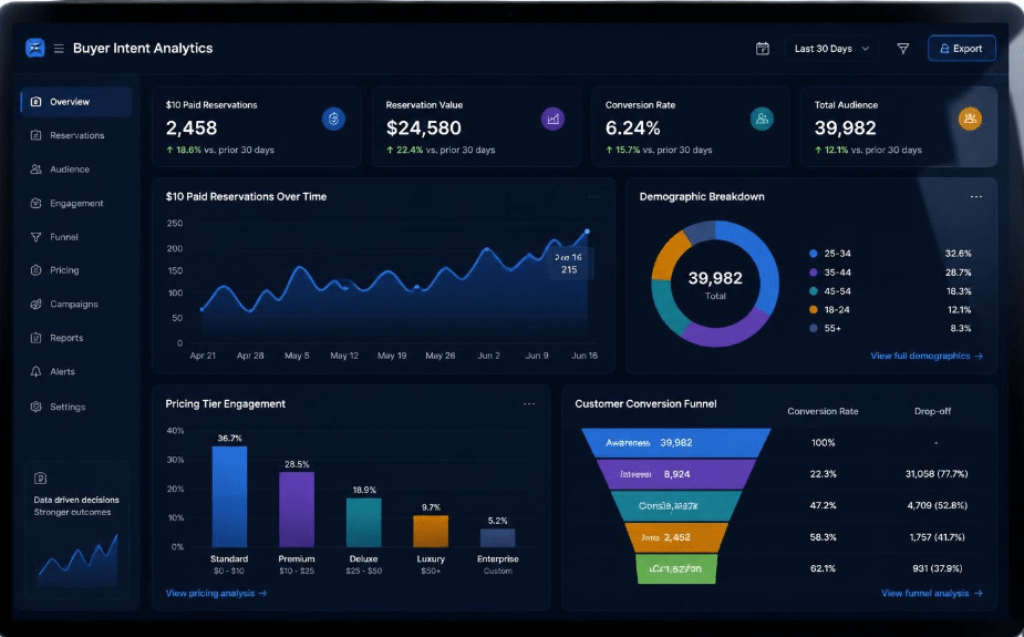
Beyond the deposit itself, the platform’s Buyer Intent Analytics layer tracks how prospects engage with pricing tiers, messaging variants, and campaign traffic — surfacing which audience segments, price points, and positioning actually drive paid commitment. This turns pre-launch marketing into a live pricing and demand experiment, run before a single mold is cut.
For example, if 70% of paid reservations lock in the premium package over the base model, you instantly know which SKU justifies your primary tooling investment.
The Payoff: How a Small Early Investment Prevents a $10,000+ Mistake
Framed correctly, the cost of running a validation campaign is not an expense — it is an insurance premium against the far larger loss of unsold inventory and wasted tooling.
Quantifying the Insurance Premium
A well-run Prelaunch.com campaign typically costs a small fraction of a single mold iteration. Against that, the downside it protects against is measured in the tens of thousands: a failed MOQ commitment alone can strand $10,000–$100,000 in capital. Spending a few hundred to a few thousand dollars to confirm real buyer intent before that commitment is, mathematically, one of the highest-leverage decisions a hardware founder can make.
Reallocating Marketing Budget With Confidence
Validated intent data does more than protect the manufacturing decision — it sharpens every dollar spent afterward. Founders who know precisely which price point, audience, and message converts paying reservations can direct ad budgets at proven segments instead of running blind tests at full retail risk.
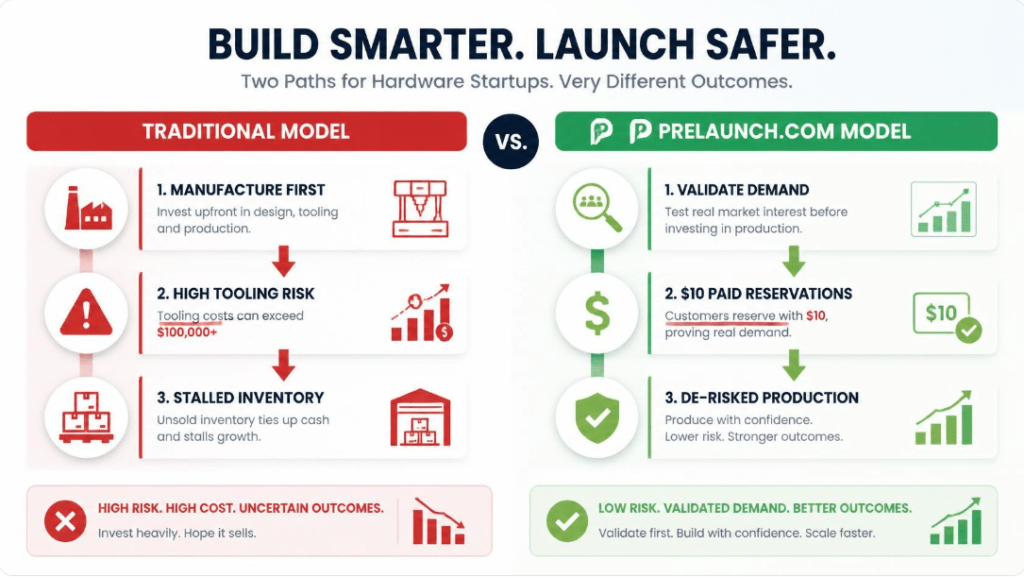
| Without Pre-Validation | With Prelaunch.com Validation |
| Commit to MOQ based on assumption | Commit to MOQ based on confirmed paid reservations |
| Discover demand gap after tooling is cut | Discover demand gap for under $10 per lead |
| Ad spend guided by guesswork | Ad spend guided by intent analytics |
Conclusion: Validate Before You Manufacture
Hardware is unforgiving of sequencing mistakes. Once tooling is cut and inventory is ordered, capital is locked in regardless of what the market decides afterward. The founders who survive this stage are not the ones with the best product renders — they are the ones who insisted on proof of paid demand before committing six figures to steel and plastic.
Prelaunch.com saves you from burning cash by moving the moment of truth to where it belongs: before manufacturing, not after. A $10 reservation is a small, honest question with a real answer attached. Whether you get 5 reservations or 5,000, you will know something a mold invoice can never tell you — whether your market is actually willing to pay.
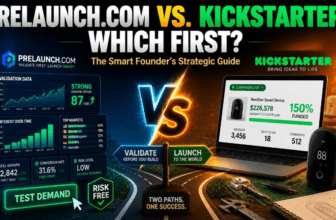
Prelaunch.com vs. Kickstarter: Which Platform Should Fund Your Hardware Idea First?
Prelaunch Review 2026: An Expert’s Honest Look at the Product Validation Platform