
Table of Contents
If you’re building a physical product and trying to decide whether to spend months developing it before knowing if anyone will actually buy, you’ve probably come across Prelaunch.com. This Prelaunch review is written from the perspective of someone who has evaluated the platform against real hardware and crowdfunding launches — not a sales page. Below, I break down how Prelaunch validates demand, what the deposit-based reservation model really proves, what it costs, and who should (and shouldn’t) use it before committing budget to production.
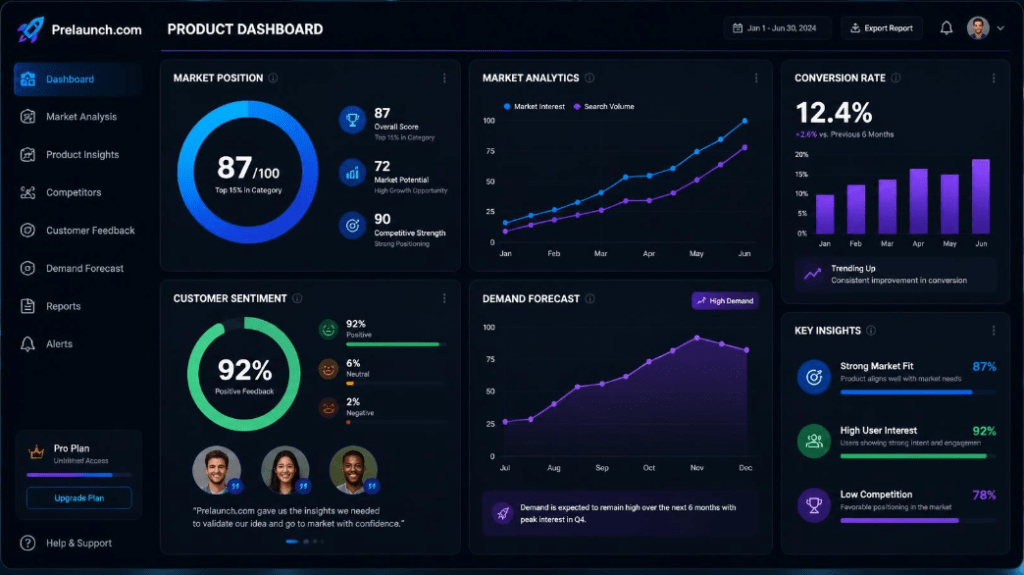
What Is Prelaunch.com
A Pre-Launch Validation Platform, Not a Crowdfunding Site
Prelaunch.com is a product validation platform built to test market demand before a product goes into production or launches on Kickstarter or Indiegogo. Rather than asking people to fill out a survey, it asks them to leave a small refundable deposit — typically $10 to $20 — to reserve a unit. That single action separates genuine buying intent from the casual “sounds cool” feedback that surveys tend to collect, which is the core insight behind the whole platform.
Built for Hardware and Innovation-Driven Products
The platform is aimed squarely at creators of physical, often innovative consumer products — gadgets, appliances, wearables — who need to know whether an idea is worth manufacturing before sinking capital into tooling and inventory. Prelaunch gives founders access to a community of over a million people interested in emerging consumer products, which helps smaller brands reach relevant early adopters without an existing audience of their own.
Key Features Worth Knowing
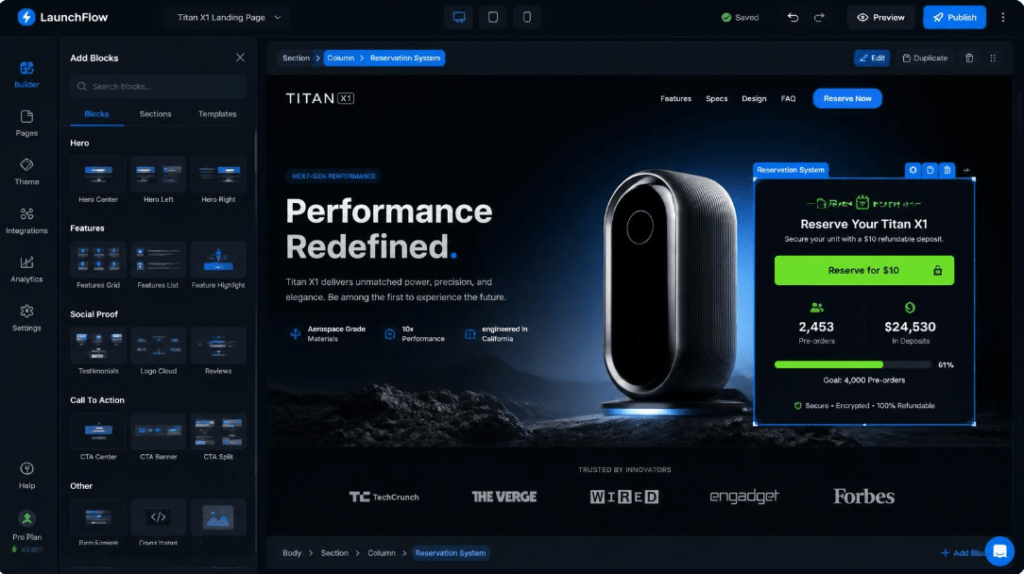
Landing Page Builder with a Reservation System
Prelaunch includes more than 50 pre-built design blocks for assembling a responsive landing page without writing code. What sets it apart from a generic page builder is the proprietary reservation system baked in: instead of a simple email opt-in, visitors put down a deposit, which the platform treats as a proxy for real purchase intent rather than passive interest.
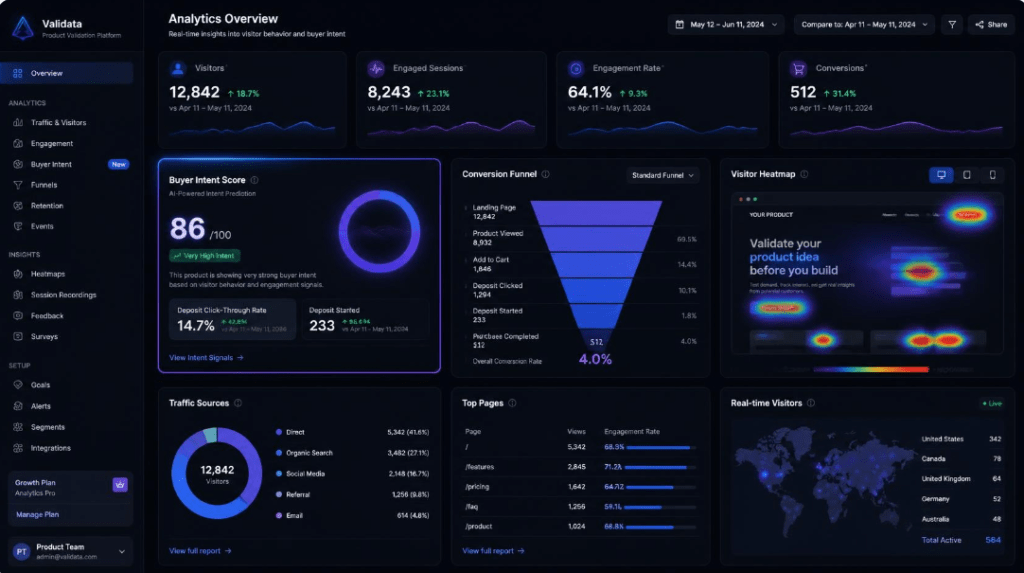
Analytics That Track Buyer Intent, Not Just Traffic
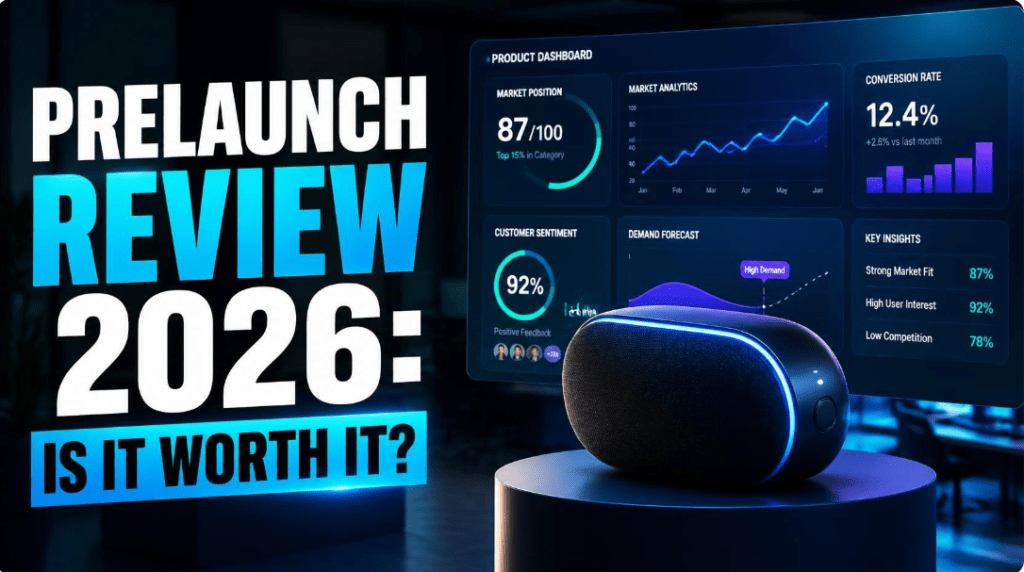
The dashboard records more than 35 data points per visitor, going well beyond standard pageview and conversion-rate tracking. It surfaces where interest is strongest, which messaging resonates, and how a product’s performance compares to benchmarks — shown as a percentile-style market position score, where a lower percentage signals stronger relative performance.
Price and Concept Testing
Higher plans allow simultaneous A/B testing of two price points and multiple product concepts, colors, or feature sets against the same audience. This is one of the more genuinely useful capabilities: it lets a founder see, with real deposits on the line, which price the market will actually bear rather than guessing based on competitor pricing alone.
AI Market Research Assistant and Concierge Support
An AI-powered research assistant helps mine competitor reviews for insight without manually reading through hundreds of them, saving meaningful time during early positioning work. On the higher-tier plans, Prelaunch also offers a concierge service where the internal team runs ad campaigns and contributes to creative and page strategy directly — useful for founders who don’t have in-house marketing expertise.
Prelaunch Pricing Plans Explained
How the Tiers Break Down
Pricing has shifted as Prelaunch has added features, so always confirm current numbers on the official pricing page before committing. As of 2026, the general shape of the plans looks roughly like this:
| Plan | Approx. Price | Best For |
| Starter | ~$95–$150/mo | Solo founders testing a single early concept |
| Pro | ~$650–$790/mo | Teams needing concierge support and deeper testing |
| Ultimate | ~$1,200–$1,400/mo | Larger-scale validation across multiple products |
Is the Price Justified?
Compared to spending tens of thousands of dollars on tooling and inventory for a product nobody wants, even the higher Prelaunch tiers are inexpensive insurance. That said, the jump from Starter to Pro is steep, and the price only makes sense if a founder is seriously weighing a production decision — it is not a casual landing-page tool for testing a hobby idea.
Prelaunch Review: Pros and Cons at a Glance
- Real buying-intent validation: A refundable deposit filters out casual interest and reveals genuine purchase intent far better than email signups or surveys.
- Built-in audience: Access to a large, relevant pool of early adopters interested in new consumer products, useful for founders without an existing list.
- Deep analytics: 35+ tracked data points give founders a genuinely detailed picture of who is interested and why.
- Price and concept testing: Testing two price points against a live audience beats guessing at a number based on competitors.
- Hands-on support at higher tiers: The concierge tier gives founders without marketing experience direct hands-on support.
- Cost scales fast: Entry pricing is already higher than many generic landing-page or survey tools, and jumps sharply at the Pro tier.
- Best suited to hardware, not all product types: The concierge and audience benefits genuinely shine for physical, novel products; it’s a weaker fit for software or purely digital offers.
- Traffic isn’t guaranteed: Reaching enough of the right audience segment still requires ad spend and effort on top of the subscription.
- Dashboard has room to improve: Some reviewers note the dashboard, while detailed, still has room to grow in usability.
Who Should Actually Use Prelaunch
A Strong Fit For
- Hardware founders pre-production: Testing real demand and pricing before committing to manufacturing.
- Teams preparing for crowdfunding: Wanting hard reservation data to strengthen a Kickstarter or Indiegogo campaign before it goes live.
- Founders choosing between product concepts: Deciding between multiple designs, colors, or feature sets with real audience feedback.
A Weaker Fit For
- Software or SaaS builders: The audience and reservation model are built around physical, innovative products.
- Very early-stage idea testing on a shoestring budget: A landing page with a simple email opt-in may be enough at very early, low-stakes stages.
- Hobbyists without production plans: The concierge tiers assume real budget is on the line for a manufacturing decision.
Prelaunch vs. the Alternatives
Prelaunch vs. a DIY Landing Page + Email List
A simple landing page with an email signup is far cheaper but only measures curiosity, not commitment. Prelaunch’s deposit mechanic produces a much stronger signal, at the cost of a real subscription fee and more setup effort.
Prelaunch vs. Running Straight to Kickstarter
Launching directly on Kickstarter tests demand with real money too, but a failed or underfunded campaign is public and can damage a brand’s credibility with a future audience. Prelaunch functions as a private rehearsal — the pricing, positioning, and audience insights can be refined before the public campaign goes live.
Prelaunch vs. Lightweight Validation Tools (e.g., Prelauncher)
Newer, lower-cost tools built around one-time payments and lighter AI-driven verdicts can work well for very early, low-budget idea checks, especially for app or digital concepts. Prelaunch is the heavier, more expensive option, but it brings a built-in physical-product audience and concierge support that lighter tools don’t offer.
Final Verdict
Prelaunch.com earns its reputation as one of the more rigorous ways to validate a physical product before committing real capital to manufacturing. The deposit-based reservation model, deep analytics, and access to a relevant early-adopter audience genuinely reduce the risk of building something the market doesn’t want. It’s a weaker fit for software products or for founders testing a very early idea on a minimal budget, where a lighter tool may be more appropriate. For hardware founders seriously weighing a production or crowdfunding decision, the cost is easy to justify against the alternative of an unfunded campaign or unsold inventory.
RECENT POST:
Kit vs GetResponse: The Definitive 2026 Comparison for Creators and Marketers