

What’s Inside This Guide
Finding the best email marketing tools for solopreneurs can be overwhelming when you’re already the marketer, designer, customer support rep, and accountant, all before lunch. When you’re running your business solo, you don’t have room for a steep learning curve or a pricing page that reads like a legal contract.
That’s the real pain point for anyone starting out — not ‘which tool has the most features,’ but which platform won’t eat your budget or your Saturday afternoon just to figure out how automation works. Many tools are built for large teams with dedicated specialists. You need something you can set up in an evening, that scales sensibly as your list grows, and that doesn’t quietly triple your bill the moment you cross 1,000 subscribers.
An in-depth analysis of pricing models, sandbox environments, and support documentation for the five leading platforms provides the foundation for this breakdown. By prioritizing real-world workflow efficiency over marketing claims, this guide highlights both key strengths and potential pitfalls. Ultimately, the goal is to identify tools that deliver consistent value, as any solution that appears perfect on paper but fails in day-to-day operations offers little benefit to the modern solopreneur.
1. GetResponse — Best All-Around Pick for Automation on a Budget
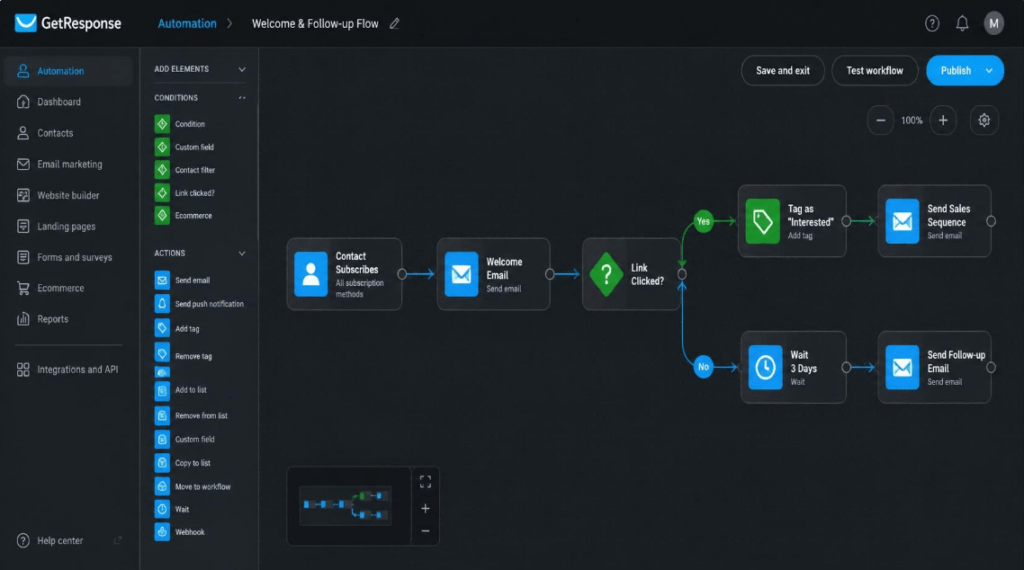
GetResponse has quietly become one of the strongest automation platforms in the affordable tier. The Marketer plan unlocks unlimited automation workflows, event-based triggers, and contact scoring — features that used to be reserved for enterprise tools like ActiveCampaign — at a price a solopreneur can actually justify.
Strengths for solopreneurs:
– Even the entry-level Starter plan includes unlimited email sends, an AI email generator, landing pages, and a website builder — a genuinely useful all-in-one starting point.
– The Marketer plan (where automation really opens up) is priced competitively against dedicated automation tools that cost far more.
– Built-in webinar hosting and sales funnels mean you can run a full product launch without stitching together three separate tools.
One thing to know: the cheapest Starter plan caps you at a single automation workflow — enough for a welcome sequence, but not much else. Most solopreneurs who actually use automation will want to budget for the Marketer tier fairly quickly.
2. Mailchimp — The Familiar Name, But Read the Fine Print
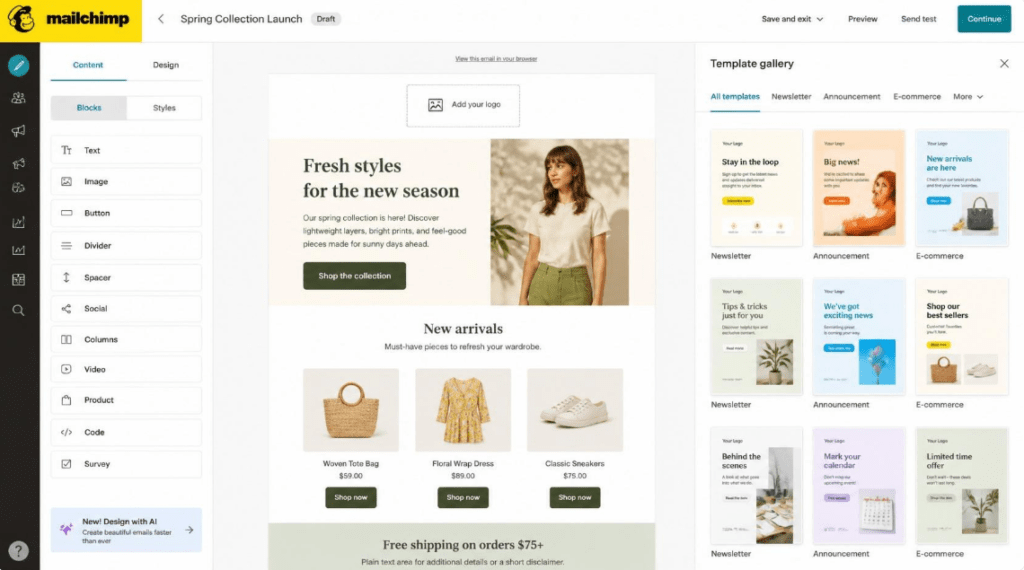
Mailchimp is the tool most people have heard of, and its editor and template library are still genuinely easy to use. But its pricing structure has gotten tighter in recent years, and the free plan is no longer the generous safety net it used to be.
Strengths for solopreneurs:
– The visual campaign builder and template library are still among the most polished and beginner-friendly in the industry.
– The Standard plan (its ‘real’ starting tier for anyone doing automation) includes multi-step automation, predictive segmentation, and basic generative AI content tools.
– Huge ecosystem of integrations — if you sell on Shopify, WordPress, or run ads, Mailchimp connects to almost everything.
One thing to know: Mailchimp counts unsubscribed and inactive contacts toward your billing tier unless you manually archive them, which means your bill can creep up even if your active list isn’t growing. The free plan is also quite limited now, so budget for the paid tier from day one.
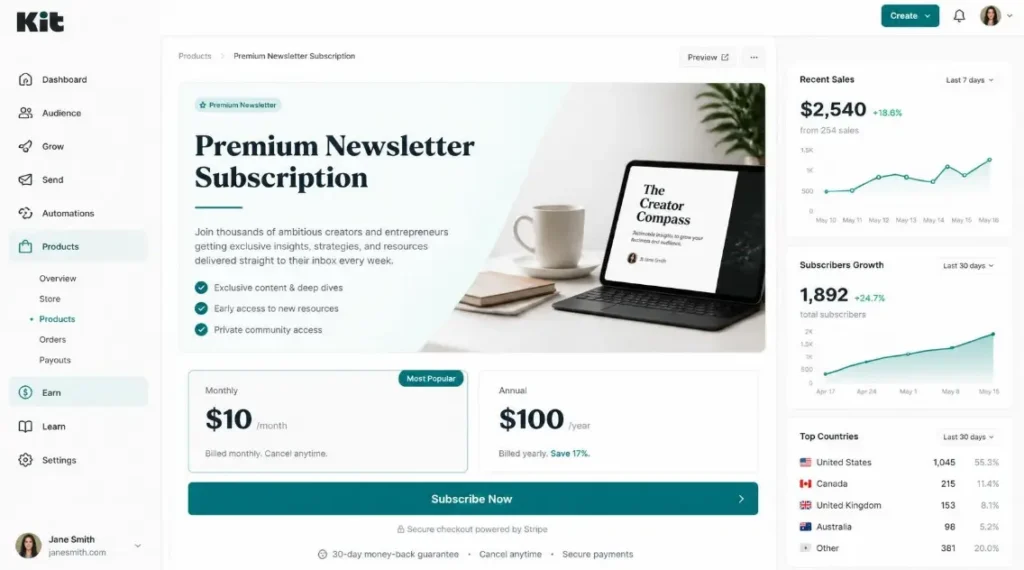
3. Kit (formerly ConvertKit) — Built Specifically for Creators Who Monetize
Kit doesn’t try to be everything for everyone — it’s built for people who write, teach, podcast, or sell digital products directly to an audience. If that’s your business model, the platform genuinely understands your workflow in a way general-purpose tools don’t.
Strengths for solopreneurs:
– The free plan supports up to 10,000 subscribers with unlimited sends, landing pages, and forms — one of the most generous free tiers in the category for creators just getting started.
– Native tools for selling digital products, paid newsletters, and subscriptions mean your email list and your income stream live in one place.
– The visual automation builder is genuinely intuitive, even for people who’ve never built a workflow before.
One thing to know: paid plans jumped noticeably in price in late 2025, and Kit charges a small transaction fee (around 3.5% + $0.30) on anything you sell through the platform — worth factoring in if monetization is a big part of your plan.
4. Brevo (formerly Sendinblue) — The Smartest Choice If You Have a Big List but Send Rarely
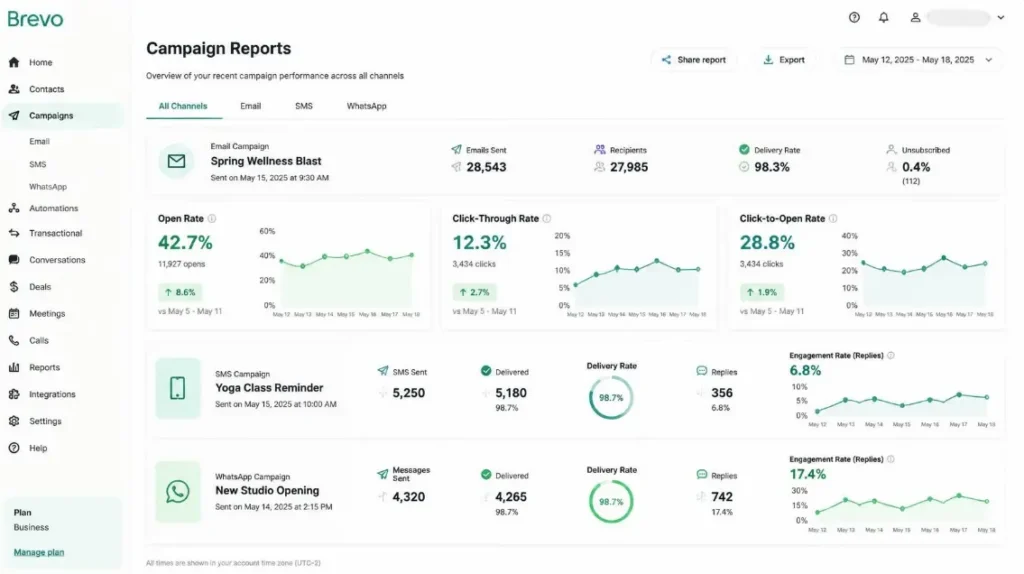
Brevo flips the usual pricing model on its head: instead of charging by how many contacts you store, it charges based on how many emails you send. If you have a large, low-activity list — think a local service business with thousands of past clients — this can be dramatically cheaper than contact-based competitors.
Strengths for solopreneurs:
– The free plan alone stores up to 100,000 contacts, which is unheard of at this price point.
– Built-in SMS and WhatsApp messaging alongside email means you’re not paying for a second platform if you want to text customers too.
– The Standard plan is one of the more affordable ways to get real marketing automation and A/B testing.
One thing to know: automation and A/B testing are locked behind the Standard plan — the cheaper Starter tier is really just for straightforward, non-automated sending, and it still shows Brevo’s branding unless you pay for an add-on.
5. MailerLite — The Cleanest, Simplest Interface for First-Timers
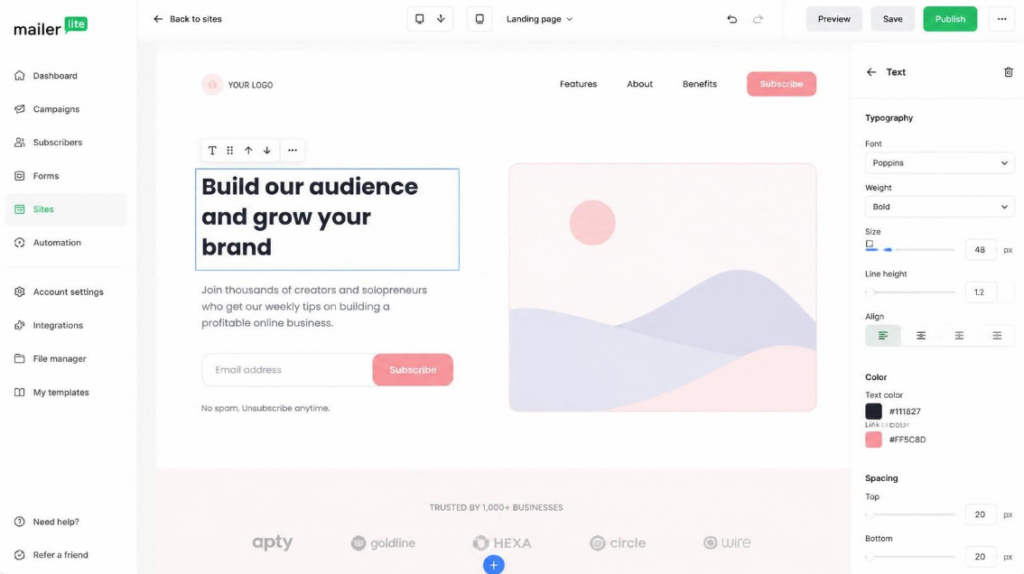
If email marketing feels intimidating and you just want to send a good-looking newsletter without a 20-minute onboarding video, MailerLite is the tool most solopreneurs land on. Its interface is famously uncluttered, and the paid tier (recently renamed Comfort) covers most of what a solo business actually needs.
Strengths for solopreneurs:
– The editor is arguably the easiest in this list to pick up with zero prior experience — genuinely a same-day setup for most people.
– Websites, landing pages, and digital product sales are bundled into paid plans at no extra charge, which is rare at this price.
– Billing is based on active subscribers only — unsubscribed or bounced contacts don’t count against your tier, unlike some competitors.
One thing to know: MailerLite significantly shrank its free plan in late 2025 (down to a smaller subscriber and send limit) and raised paid-plan prices at the same time, so the ‘cheapest option’ reputation it built its name on is less true today than it used to be.
Quick Comparison Table
| Tool | Starting Price | Ease of Use | AI Features | Best Suited For |
| GetResponse | ~$19/mo (1,000 contacts) | Moderate — more powerful, slightly more setup | AI email generator | Solopreneurs who want serious automation without an enterprise price tag |
| Mailchimp | ~$13/mo (500 contacts) | Very easy, familiar interface | Basic AI content tools (Standard plan+) | Beginners who want a polished editor and huge integration library |
| Kit (ConvertKit) | Free up to 10,000 subs; paid from ~$33–39/mo | Easy, creator-focused | Limited (no strong native AI writer) | Creators, newsletter writers, and anyone selling digital products |
| Brevo | Free up to 100,000 contacts; paid from ~$9/mo | Easy to moderate | AI content generation | Solopreneurs with a large but infrequently-emailed list; SMS/WhatsApp needs |
| MailerLite | Free (limited); paid from ~$10–12/mo | Easiest in this list | AI writing assistant (paid plans) | Absolute beginners who want the simplest possible setup |
Pricing changes frequently across all providers and scales with your contact count — always check the current pricing page before committing to a plan.
Choosing the Best Email Marketing Tools for Solopreneurs
There’s no single ‘best’ tool here — it genuinely depends on where you are and what you’re optimizing for.
(a) If you’re a complete beginner and just want to get a newsletter out the door → go with MailerLite. The interface has the shallowest learning curve of any tool on this list, and the free plan is enough to test the waters before you commit to a subscription.
(b) If you want to focus on automation and building out proper customer journeys → go with GetResponse. Once you move to the Marketer plan, you get automation depth that’s rare at this price point — ideal if you’re planning welcome sequences, abandoned cart flows, or lead-nurturing campaigns down the line.
(c) If cost efficiency is your top priority, especially with a bigger contact list → go with Brevo. Its send-based pricing (rather than contact-based) means you can hold a large list without paying a premium for every name on it, as long as you’re not blasting emails daily.
And a quick note for creators specifically: if your business model revolves around a paid newsletter, a course, or digital downloads, Kit deserves a serious look even though it didn’t top a specific category above — its monetization tools are built for exactly that use case.
Whichever you choose, the honest truth is this: the best email marketing tool is the one you’ll actually open and use every week. Start with the plan that fits your current list size, not the one you think you’ll need in a year — you can always upgrade later, and every platform here makes that easy.
RELATED ARTICLES:
GetResponse vs Mailchimp: Which One Actually Fits Your Business?
GetResponse Review 2026: Is It Really Worth It for Beginners?
CodeDesign.ai Review 2026: Amazing AI Tool to Automate Your Ads?